











A complete, easy-to-understand guide that breaks down how the Escape From Tarkov 1.0 economy truly works. This article shows you the fastest and most reliable ways to make money at every stage of the wipe — from early scav runs to late-game market plays. You’ll learn how to use traders, crafts, barters, targeted routes, and the flea market to grow your rubles steadily without guesswork or risky experiments. Whether you’re a beginner or a seasoned player returning for 1.0, this guide gives you clear strategies that help you profit fast, stay financially stable, and avoid the mistakes that drain most players’ wallets.
What Changed in Tarkov 1.0’s Economy
Escape From Tarkov 1.0 completely overhauled the in-game economy, making it more stable and predictable. Understanding these changes is essential to planning your raids and maximizing profit. The main updates are:
- Controlled Prices and Stable Market
Prices are now less volatile, allowing players to predict profits more accurately. Sudden market drops are rare, which reduces the risk of losing rubles unexpectedly. - Reworked Traders and Barters
Traders have more logical item ranges and pricing. Barters are more valuable and meaningful, making it important to know which trader buys what for consistent income. - Flea Market Level Locks
Some items are now locked behind player levels. This slows early-game inflation and forces players to progress naturally instead of relying solely on the flea market. - Stronger Hideout and Crafting
The hideout now provides passive income even when you’re not in raids. Building key stations early increases long-term profit, and crafting high-demand items becomes a reliable source of rubles. - Focus on Survival and Extraction
Successful extraction is now more important than simply looting rare items. Survival and bringing gear out safely has a bigger impact on your overall profit. - Balanced High-Value Items and Missions
Some items and missions now have significant economic value, making planning and targeting specific raids more rewarding.
How the Tarkov 1.0 Economy Works — Money Flow Explained
The core of Tarkov’s economy is simple: items enter the world through raids and leave the world through traders, crafts, and player mistakes. Your job is to grab items that hold real value and turn them into resources that keep your raids profitable. Once you think about money as a cycle, your actions start making more sense.
Most of your income will still come from raids, but your choices after leaving a raid matter even more. What you sell, what you keep, and what you craft will impact your profit per hour. Many beginners lose money because they stash everything instead of converting items into stable income.
Another major shift is the importance of trader loyalty levels. Higher trader levels unlock better prices, more valuable items, and access to gear you can turn into profit. Because of this, completing missions isn’t just for character progression—it’s an investment in future income.
Once you reach the flea market, the economy opens up. But even then, you can’t rely on it alone. Market prices move, demand changes, and you need a steady routine that mixes raids, crafting, and barters. Efficient players combine all these systems and avoid depending on any single one.
Best Money-Making Strategies in Tarkov 1.0 — Early, Mid, and Late Game
Early-Game — Survive, Sell, Build Hideout Basics
In the early game, your main goal is survival. Focus on finishing raids alive and building a foundation for profit. Key strategies:
- Prioritize survival over loot — extract with whatever you can carry; avoid high-risk areas.
- Scav runs — free loot and gear, often spawning near extraction; gather meds, crafting materials, weapon parts, and other valuable light items.
- Sell aggressively — do not hoard items “just in case”; sell duplicate attachments, unused meds, and electronics to fund future raids.
- Upgrade your hideout — unlock Medstation, Water Collector, and Generator early to reduce ongoing costs and enable basic crafts for steady profit.
Mid-Game — Craft, Flip, Run Targeted Maps
Mid-game is when your income grows, and your options expand. Focus on efficiency and smart planning:
- Targeted loot runs — choose maps and farm specific high-value areas like medical spawns, toolboxes, or computers; consistent value each raid with lower risk.
- Crafting in hideout — items often cost less to craft than their market value; set stations to run while offline for passive income.
- Barter trades — exchange cheap, common items for gear worth more; repeat high-return barters regularly for reliable profit.
- Use flea market strategically — identify items with steady demand; list selectively to maximize return.
Late-Game — High-Risk Runs and Market Plays
Late-game requires confidence, strong gear, and map knowledge. Focus on high-reward strategies while managing risk:
- High-value raids — run top-tier maps like Labs or Reserve for rare items such as keycards, high-end weapon mods, and rare electronics.
- Market plays — buy undervalued items and resell for profit; monitor price trends to spot quick flips.
- Hideout efficiency — max-level crafting stations produce high-value items daily; maintain production even when not raiding.
- Consistent extraction — prioritize surviving and extracting valuable loot over chasing every rare item; consistency ensures steady profit.
Map-Specific Money Routes in Tarkov 1.0 — Where to Farm for Maximum Profit
Different maps offer different profit styles. You should pick maps that fit your skill level, not just those with the highest theoretical gains. This way, your survival rate remains high, and your income stays steady across sessions.
Some maps are perfect for quick, clean loot grabs. These maps have many containers, toolboxes, computers, and hidden stashes. You move fast, avoid fights, and extract early. These runs are ideal for players who prefer a safer, more predictable income style.
Other maps offer high-end loot but require more risk. They attract geared players and PvP enjoyers. If you’re confident in your aim and map knowledge, these maps can be extremely profitable. But remember: consistent extraction is always more valuable than one lucky raid.
A smart approach is to rotate maps. Spend part of your session on safe profit routes and end with one or two higher-risk raids. This keeps gameplay fresh and protects your profits.
Profitable Barters and Crafting Chains
Barters are a powerful tool because they let you convert low-value items into gear that sells for much more. Many players ignore them, which is a mistake. Whenever you find common loot such as screws, tubes, meds, or electronics, check if a trader offers a profitable exchange.
Crafting shines in the mid and late game. Some crafts always generate profit no matter the market because their output has stable demand. Others depend on market trends but can be extremely lucrative when timed right. Keeping your stations running regularly builds passive income that slowly snowballs.
Below is a simple table showing item groups worth focusing on:
| Item Group | Why It’s Profitable | Notes |
|---|---|---|
| Medical items | Used in missions and crafting | Stable trader value |
| Electronics | High crafting demand | Light and quick to stash |
| Weapon parts | Always high flea demand | Great flip potential |
| Barter items | Needed for high-tier trades | Often underestimated |
Try combining barters and crafting. For example, barter for an item that also starts a profitable craft. This multiplies your income without extra effort.
Flea Market Tactics, Level Gates, and Smart Listing
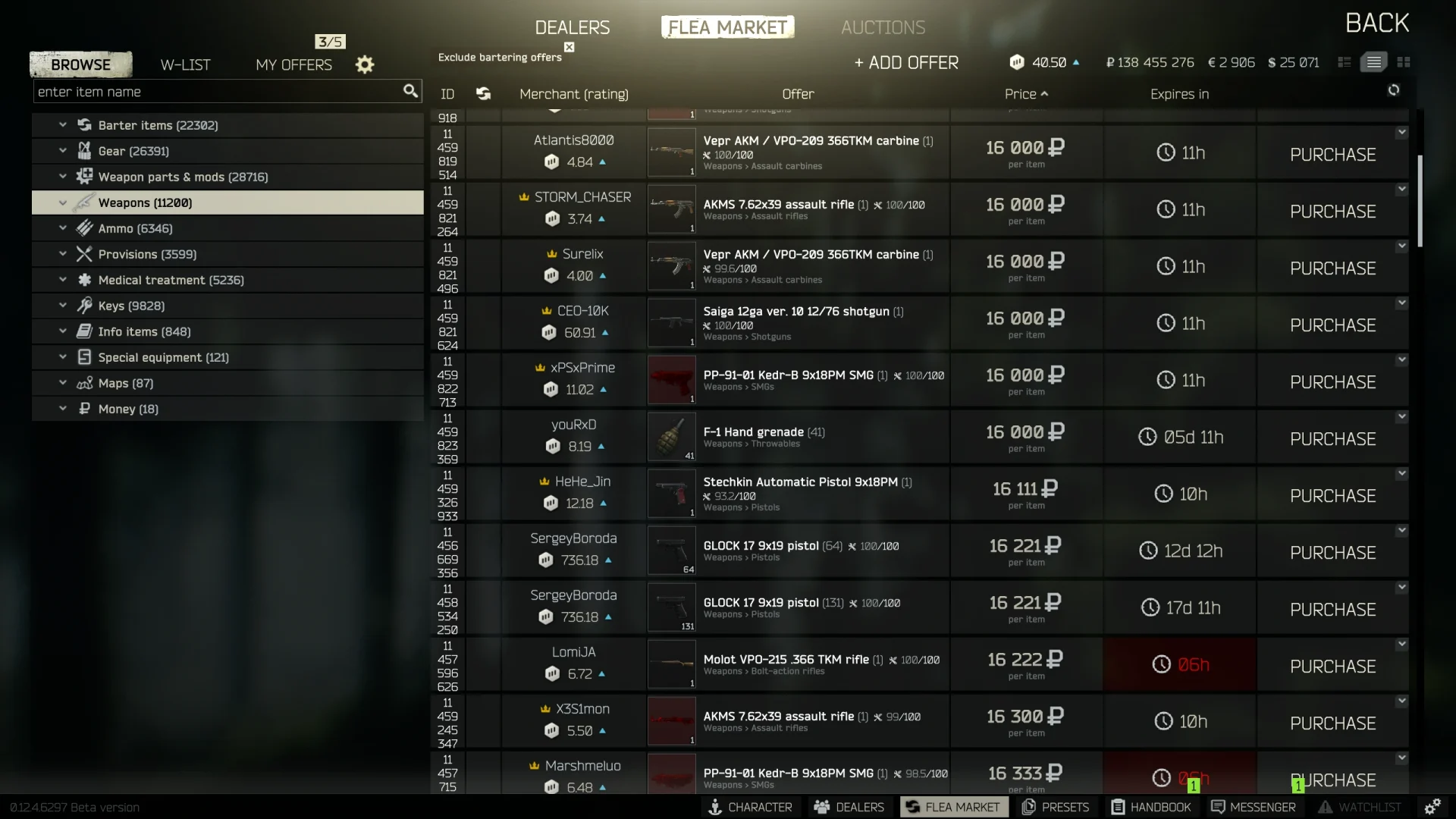
The flea market is powerful, but it punishes players who don’t understand its pacing. Your goal is to list items that sell quickly and avoid holding inventory that loses value over time. Items with high demand—keys, meds, weapon mods—sell almost instantly when priced correctly.
Level gates exist to create a fair economy. Some categories remain locked until you reach a certain point in progression, which slows down flipping and forces players to rely on raids and traders first. This makes the early wipe more balanced and keeps endgame items from flooding the market too early.
Smart listing is all about timing. Avoid listing items during peak hours when prices drop from heavy competition. List when the market is calmer and prices stabilize. Also watch for price patterns—some items rise late at night or early in the morning, depending on the region.
Finally, avoid emotional pricing. Many players panic-sell valuable loot after a bad raid. Stick to your strategy, watch the charts, and list patiently. The flea market rewards calm players.
Tarkov 1.0 Risk Management — Staying Profitable Every Raid
Many players lose money not because their loot is bad, but because their spending is inefficient. Bring only the gear you can afford to lose. Repair armor only when it makes sense, and pick ammo that fits your playstyle and budget.
FAQ
Mastering Tarkov 1.0 Economy for Maximum Profit
Escape From Tarkov 1.0 rewards smart, patient players. Focus on survival, strategic loot, and effective use of traders, flea market, and crafting.
Start with scav runs and hideout basics. Progress into targeted map farming, barters, and crafting chains. By late-game, you can confidently run high-value raids and manipulate the market for profit.
The key is balance: consistent, safe income combined with high-reward opportunities. Always monitor your profits, adjust strategies based on market trends, and keep hideout production active.
Players who follow these principles will earn money efficiently, minimize losses, and stay competitive in every wipe. With knowledge, planning, and patience, you can turn every raid into a profit-generating adventure.
