











VL-7 Strike in Battlefield 6 is built around psychoactive smoke that can twist what you see and hear. When hallucinations hit, many players start reacting to the wrong things. They chase fake movement, spin on every sound cue, and stall at doors. Objectives punish that hesitation.
This guide is written for objective players. You’ll learn how to treat masks and filters like a match resource, how to move through contaminated zones without wasting time, and how to keep your squad effective even when audio and visuals feel unreliable.
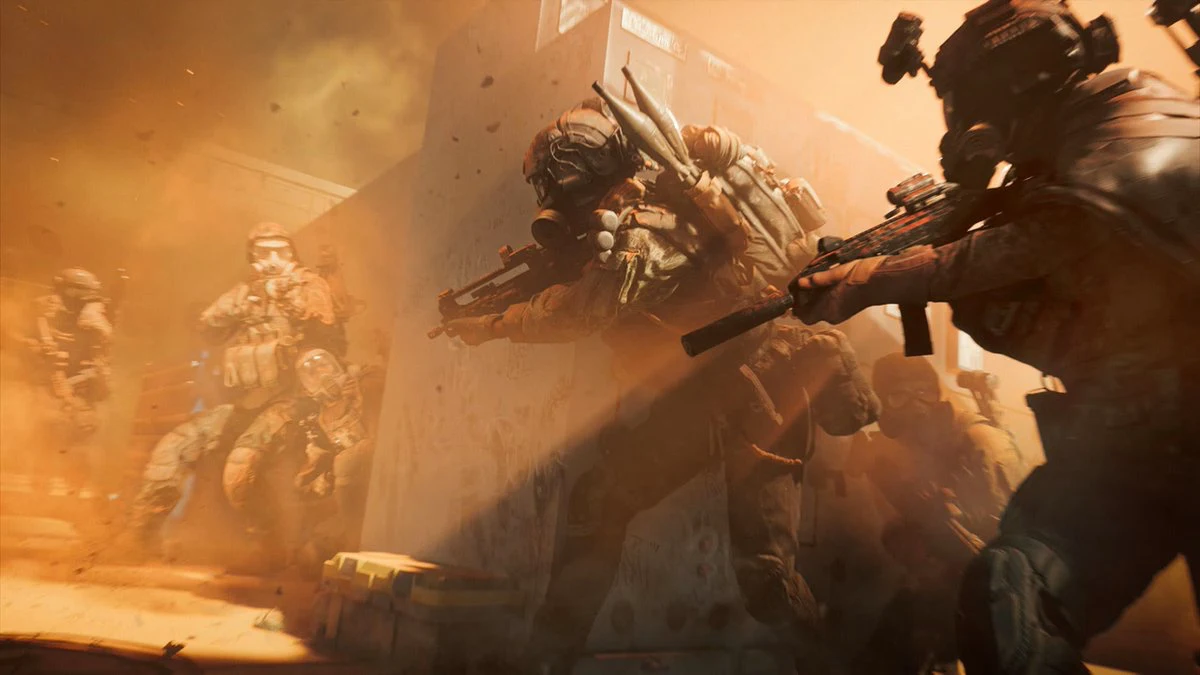
Battlefield 6 VL-7 Strike Mode Guide: What Objective Players Must Do
VL-7 Strike revolves around psychoactive smoke zones. The smoke is not just visual clutter. It’s a pressure tool. When you are exposed without protection, your senses stop being reliable. Even if you don’t know the exact “rules” behind the effect, you can feel the result: you hesitate, you misread, you overreact.
Hallucinations usually break players in three ways:
- They pull your aim and attention away from the objective.
- They create false urgency, so you rotate at the wrong time.
- They turn small mistakes into long delays. One wrong turn becomes a late contest. One late contest becomes a lost capture.
In this mode, the objective timer is your anchor. When you feel uncertain, you don’t need to solve the smoke. You need to keep your play centered on the objective. That mindset alone prevents many throws.
A good VL-7 Strike player looks calm. They take fewer “mystery fights,” they rotate earlier, and they treat smoke time as a limited resource. The kill feed might not celebrate them, but the scoreboard will.
Buy services for
Battlefield 6!
Get help with the parts of the game that take the most time. Browse available services or place a custom order.
Order
Best Gas Mask Strategy in VL-7 Strike: Protective Mask Timing and Filter Management
The Protective Mask is how you function around contaminated areas. Filters are what give the mask value over time. If you treat filters like a nice bonus, you will run out when the match becomes most important.
Think in “objective windows”
Your mask has one job: let you do an objective task in or near VL-7 smoke. That’s it. Every second of mask time should have a purpose connected to the objective.
Mask time is worth spending on:
- A clean contest that prevents a capture tick.
- A capture push that flips the meter.
- A plant/disable/interaction that ends the round faster.
- A revive chain that keeps the objective defended.
Mask time is wasted when you use it to chase a single kill that doesn’t change the objective.
Simple mask timing rules that stay true under pressure
Most players lose control because they mask up too early and stay too long. Your goal is the opposite: short, timed entries.
Use this pattern:
- Mask ON only when you are about to step into smoke for a timed action.
- Do the action quickly (contest/cap/revive/clear close threat).
- Mask OFF as soon as you can return to clean air and hold angles.
That last step matters. Clean air gives you stable info. Stable info wins fights. Stable info also stops your team from chasing ghosts.
Filter management: how to avoid the late-game “empty tank”
Filters decide who can contest at the end. If you enter the final minutes with no filter time, you can still shoot well and still lose because you simply can’t stay in the zone when it matters.
Here’s the rhythm that works:
- Early match: build a buffer. Don’t burn all your protection the first time you see smoke.
- Mid match: spend filters only when the objective can move. If you are not gaining progress, stop paying for smoke time.
- Late match: keep enough filter time for the last two contests. The final push is rarely one entry. It’s usually two waves.
A small mindset shift helps: filters are closer to a “win condition resource” than a comfort item. If your team treats filters seriously, your whole match becomes less chaotic.
VL-7 Hallucinations in Battlefield 6: Why You Keep Losing Objectives
Hallucinations steal objectives by breaking decision speed. You hesitate at doors. You check the same corner twice. You react to a sound cue that pulls two players off the point. One wrong reaction rarely ends the round, yet a chain of them does. Your team arrives late, touches late, and fights from worse positions.
This is what the failure pattern looks like in real matches:
| VL-7 effect you feel | Typical reaction in a lobby | What it does to objectives |
|---|---|---|
| Audio feels “too real” | Players spin, over-rotate, chase | Entry loses numbers, hold opens a lane |
| Visual noise and false silhouettes | Wide swings and wasted shots | Bad trades, reload at the wrong time |
| General disorientation | Slow clears, doorway stacking | Late cap/defuse, easy enemy setup |
The fix is lowering the number of choices you make inside the smoke. Shorter routes, shorter angles, faster touches. When your decision tree gets smaller, hallucinations have less room to drag you off task.
Best Movement and Positioning in VL-7 Smoke (Battlefield 6 Objective Strategy)
Movement in VL-7 should feel direct. The cloud is where teams waste time, and time is what objectives punish. A practical rule is the two-cover rule: before you move, know your next cover and the cover after that. If you can’t name both, you’re about to drift. Drift leads to random fights, random fights burn protection, and burned protection breaks your next push.
Edge play is a big advantage when the map allows it. The edge of the smoke gives cleaner sightlines and faster escape paths. It also reduces the amount of visual clutter you must process, which leads to fewer panic swings and fewer moments where your team freezes because nobody wants to be first through the haze.
Pair movement wins games here. Two players moving together keeps your push stable even when cues feel wrong. One player takes close corners and doorframes, the other holds the next lane and stays ready to trade. That pattern turns chaos into a series of smaller fights you can win on purpose.
Battlefield 6 VL-7 Strike Objective Guide: How to Capture, Hold, and Retake Points
Objective success in VL-7 comes from tempo. You want fast, clean attempts that either succeed or reset quickly. Long, slow attempts often end with everyone low on protection and stuck in a bad spot.
Use these subpoints as your repeatable script:
Taking an objective
- Call a push time and commit fast.
- Enter with numbers (two minimum, three is strong).
- Clear only the angles that block the touch.
- Touch early and force the enemy to react.
- Lock exits with crossfire so the retake is predictable.
A good take feels quick. It feels direct. It doesn’t feel like a long search.
Holding an objective
- Keep an anchor alive near objective cover.
- Hold short angles that support trades.
- Let one player step out to refresh protection and return on a timer.
- Avoid chasing outside the hold shape unless the anchor is safe.
Holds fall apart when everyone hunts and nobody “owns” the point.
Retaking an objective
- Pick one safe lane into the objective area.
- Clear the last two blocking angles.
- Touch the objective to trigger contact.
- Expand outward one doorway at a time.
If the retake stalls outside the entry and protection is dropping, reset early. Clean second attempts beat slow first attempts that drain the squad.
VL-7 Strike Gunfight Tips: How to Win Fights During Hallucinations in Battlefield 6
VL-7 makes players take too many fights on bad information. You want fewer fights, taken from better positions, with faster trades.
A simple confirmation rule helps: commit to shots when you have something solid, like clear movement, a teammate call that matches your angle, or obvious hit feedback. When you don’t have confirmation, hold your angle and shift to a simpler sightline. This saves ammo, saves focus, and keeps you ready for the real push.
Short angles are your best friend in VL-7 Strike. Doorways, stair tops, tight lanes, and objective entrances reduce the amount of noise you must read. They also make trading easier. Keep your aim habits basic and repeatable: burst more often, reset your crosshair to likely entry lines, and avoid tracking “maybe targets” through haze.

Best Squad Roles and Comms for VL-7 Strike Objectives (Battlefield 6)
VL-7 Strike feels chaotic when comms become guesses. Your squad needs a small set of roles and a small set of words that stay useful under pressure.
Four roles cover most situations: a point player to touch early, an anchor to stay alive near cover, a cleaner to trade and remove close blockers, and a runner to refresh protection and return on a timer. Your timing matters more than perfect loadouts.
For comms, keep calls short and measurable:
- “Confirmed / Unconfirmed”
- “Touching”
- “Hold exits”
- “Reset”
- “Filter check”
These calls prevent the classic VL-7 mistake where three people peel off the objective because one player heard something urgent.
Battlefield 6 VL-7 Strike Mistakes to Avoid (Common Objective Losses)
Most losses come from repeat errors. Players throw rounds when they enter one by one, burn protection before the real push starts, and spend too long clearing space while the objective sits idle. Another common throw is leaving the point to hunt while nobody anchors. In VL-7, hunting feels tempting because hallucinations can make you feel surrounded. That feeling pulls teams out of position and gives away free progress.
If you fix one thing today, fix entry discipline. Two players through the same doorway at the same time wins more objectives than four players arriving at four different times.
Battlefield 6 VL-7 Strike Practice Tips: Quick Habits to Improve Fast
You don’t need a special training setup to get better at VL-7 Strike. You need a few rules you can repeat.
Start with the 30-second touch habit: after your squad calls a push, aim to touch the objective within about 30 seconds. If you can’t, reset and refresh protection instead of drifting in the cloud. Learn two routes to each objective area: an edge route for stable fights and a shorter emergency route for fast retakes. Keep the anchor promise: one player stays responsible for the objective even when the rest of the team wants to chase.
When you combine those habits, VL-7 stops feeling random. Your protection stays stable, your pushes stay clean, and your objective timing stays sharp.
Buy services for
Battlefield 6!
Get help with the parts of the game that take the most time. Browse available services or place a custom order.
Order
Battlefield 6 VL-7 Strike Win Strategy: The Repeatable Objective Loop
If you want one simple loop to remember, use this every round:
- plan protection spend before the push
- move in pairs and touch early
- hold with an anchor, then refresh and rotate
Run that loop consistently and hallucinations fade into background noise. Your objectives keep moving, and your win rate follows.
