











Extraction shooters have a problem they can’t seem to shake. They hook you hard in the first few hours, then slowly bleed you out through punishing gear loss until your vault is empty, your motivation is gone, and you’re back on the main menu wondering why you even bothered. It’s a cycle the genre has never properly solved — until now.
Bungie’s upcoming shooter Marathon introduces a Runner Shell called Rook, and on the surface it sounds almost too simple to matter. A late-joining solo scavenger with no loadout and no tasks. But dig into what Rook actually does mechanically and socially, and it starts to look less like a side feature and more like a direct surgical answer to the genre’s most persistent retention problem.
This article breaks down exactly how the Rook system works, why its design decisions are smarter than they first appear, and what it signals about how Bungie is thinking about Marathon as a live game — not just a launch event.
What the Rook Actually Is in Marathon (And How It Differs From Every Other Runner)
Every Runner Shell in Marathon comes with its own set of abilities, passive traits, and playstyle identity. Rook breaks the mold more aggressively than any of the others.
Where standard Runners drop at the start of a match with a pre-selected loadout and full access to task progression, Rook enters the match 10 to 15 minutes after it has already started. No personal gear. No tasks to chase. And crucially — nothing at risk if you die.
Here’s how Rook stacks up against standard Runners at a glance:
| Feature | Standard Runners | Rook |
|---|---|---|
| Join time | Match start | Mid-match (10–15 min in) |
| Starting loadout | Player-defined | None (minimal predefined kit) |
| Gear at risk | Yes | No |
| Task progression | Yes | No |
| PvE AI aggression | Normal | Passive (ignored by enemies) |
| Play style | Solo or crew | Solo only |
That last point — AI enemies ignoring Rook — is where things get genuinely interesting. But before getting into that, there’s a more fundamental question worth answering first.
Buy services for
Marathon!
Get help with the parts of the game that take the most time. Browse available services or place a custom order.
Order
Why No Loadout Is Actually a Feature, Not a Bug
The single biggest reason players quit extraction shooters isn’t difficulty. It’s the death spiral.
You lose a fight. You lose your gear. Now you have to run cheap, incomplete loadouts into the same dangerous maps against players who kept their good stuff. You lose again. Your vault gets thinner. At some point the gap between you and geared players feels uncrossable, and logging off starts to feel like the only sane option.
Rook sidesteps this entirely. You spawn in with nothing, so there’s nothing to lose. Whatever loot you find during the run is yours to extract and keep. That’s a completely different risk equation from anything else in the genre.
It’s worth comparing this briefly to Escape From Tarkov’s “hatchling” runs — where players deliberately spawn with nothing to avoid losing gear. That behavior emerged organically because players found the game’s risk-loss loop unbearable.
Bungie looked at that workaround and essentially built it into the game as a first-class mechanic with its own rules, identity, and rewards. That’s a meaningful design choice.
The result is a mode where anxiety is replaced by curiosity. You’re not protecting anything. You’re just looking for opportunity.
The AI Passive — Marathon's Rook Has an Invisible Shield Most Players Miss
This is probably the most underreported detail about how Rook actually plays.
PvE AI enemies — the drones, soldiers, and other hostile NPCs that populate Marathon’s maps — ignore Rook by default. They treat the Rook shell as neutral. That means Rook can move through contested AI zones that would shred a standard Runner, quietly looting while firefights happen nearby.
It’s not invincibility. Player crews still see Rook, still shoot Rook, and with Rook carrying no loadout to speak of, winning a straight gunfight against a geared three-person crew isn’t realistic. But that’s not the point.
The AI passive opens up movement paths and timing windows that other Runners simply don’t have:
- Looting behind an AI patrol line while another crew fights through the front
- Watching a crew wipe to elite enemies, then scavenging their leftovers
- Using high-density AI zones as natural cover against pursuing players
- Moving through areas other players are actively avoiding
This asymmetry is what makes Rook feel different to play rather than just statistically weaker. The AI passive isn’t compensation for having no gear — it’s a genuine tool that rewards positional awareness and patience over raw firepower.
Rook as a Retention Tool — How Bungie Is Fighting Extraction Shooter Burnout
The death spiral kills individual sessions. Burnout kills the game long-term.
Extraction shooter communities follow a recognizable pattern: massive launch spikes, sharp two-week drop-offs, smaller dedicated populations that can sustain the game or slowly erode it depending on how the developer handles the middle months. The players most likely to leave are the ones who hit consecutive bad runs and empty their vault.
Rook directly targets that demographic. If your stash is dry, Rook gives you something productive to do that slowly rebuilds it. No gear needed to enter. Every match has upside. It keeps those players inside the game’s ecosystem — running maps, building familiarity, staying connected to the community — rather than jumping to something else.
What makes this work is that Rook doesn’t compete with the full Runner experience. No task progression means Rook isn’t a shortcut — it’s a fallback. Players who are doing well on standard Runners have no reason to switch. Players who are struggling have a way to stay engaged without feeling punished. Both groups can coexist in the same lobby, which leads to the next point.
Rook and the Social Layer — How a Solo-Only Runner Affects the Whole Lobby
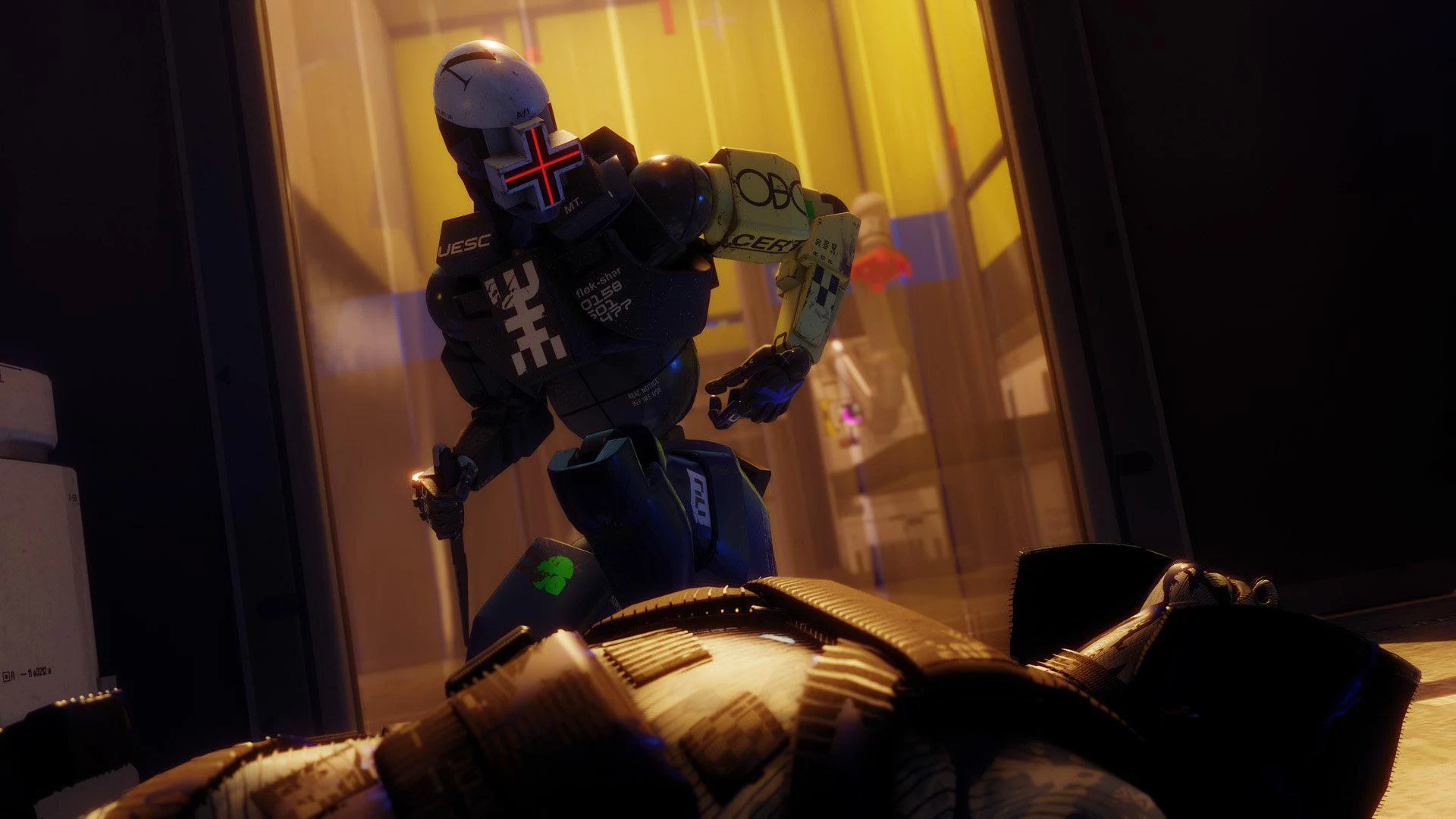
Here’s an angle that most early coverage of Rook has ignored: Rook changes how other players play, not just how Rook players play.
When a Rook drops into a match that’s already 10 minutes in, a trio of Runners that’s been working a loot route now has a wildcard in the map. Someone is in there who ignored the AI, slipped past chokepoints, and has been watching. That changes patrol decisions. It creates paranoia around seemingly clear areas.
Marathon has confirmed proximity voice chat, and that amplifies everything. A Rook player who’s been watching a crew for five minutes has information. They can try to negotiate, bait crews into bad positions, or just listen in and adapt. It’s the kind of emergent social dynamic that makes extraction shooters memorable — and Rook is structurally built to generate it.
In most games, the weakest player in the lobby is irrelevant background noise. Rook makes the “weakest” player a persistent variable that experienced crews actually have to account for.
What the Rook System Reveals About Bungie's Design Philosophy for Marathon
Rook wasn’t part of Marathon’s original public-facing design when the game was first shown. It emerged later — notably, Bungie pushed Marathon’s launch from September 2025 to March 5, 2026, citing the need to address feedback from the closed alpha. Rook’s reveal came during that delay window.
That context matters. Rook isn’t a casual feature that got thrown in during polish. It’s a structural response to known player feedback about the extraction shooter onboarding and retention problem. Bungie identified that the genre loses people at a specific inflection point and designed a mechanic that addresses that point directly.
Compare that to what competitors are doing. Escape From Tarkov has leaned harder into punishment and complexity over the years. Arc Raiders is building a more accessible extraction loop, but hasn’t introduced anything as specifically targeted as Rook. Delta Force has scavenger-style mechanics, but they’re closer to Tarkov’s organic workarounds than a fully designed shell with unique passives and entry timing.
Rook signals that Bungie is thinking about player lifecycle — what happens to someone in month three of Marathon, not just hour three.
Buy services for
Marathon!
Get help with the parts of the game that take the most time. Browse available services or place a custom order.
Order
The Limitations of Rook — What It Doesn't Solve
Rook is a smart design. It’s worth being specific about where it ends.
- No task progression means Rook runs don’t advance your account the same way standard runs do. If progression is what motivates you, Rook can’t replace standard Runner play.
- Solo-only restriction means you can’t run Rook with a squad. If your friends are all playing, you’re on your own.
- Still fully PvP-vulnerable. Experienced crews know Rook is unequipped. A team that spots you and decides you’re worth killing has a significant advantage.
- Content depth is separate from Rook entirely. Post-alpha feedback flagged concerns about map variety and long-term content. Rook doesn’t address any of that.
- Loot economy health matters. If Marathon’s full game has spawn rate or loot balance issues, Rook scavenging becomes much less rewarding regardless of how clever the system is.
Rook solves the re-entry problem. It doesn’t solve the game.
Is the Rook System Enough to Make Marathon a Lasting Extraction Shooter?
Probably not on its own — but that’s not really the question.
Marathon launches on March 5, 2026 at $40, which is a deliberate choice. Bungie is positioning it below AAA full price to lower the commitment barrier, and the game doesn’t have a free-to-play conversion path at launch. That makes retention design more critical, not less. Players who paid $40 and stop playing are a permanent loss.
Rook lowers the floor without touching the ceiling. The most competitive, gear-obsessed players never have to think about it. Players who would otherwise quit have somewhere to go. That’s the kind of systemic design that tends to matter a lot in months four through eight of a live game’s lifespan — the window where most extraction shooters start losing their communities.
If Marathon’s core loop, map design, and seasonal content deliver, Rook becomes a smart retention layer on top of a solid foundation. If the rest of the game doesn’t hold up, Rook buys a few extra weeks at best. Either way, as a solution to a well-documented genre problem, it’s worth paying attention to — and if it works, other developers in the space will be copying it within a year.
