











Landing on Talos-II for the first time is genuinely overwhelming. Within the first hour, you’re juggling real-time combat, a factory construction system, gacha banners, gear crafting, and resource management — all at once. Most guides either skim the surface or go so deep into optimization that they’re useless if you’re still figuring out which button does what.
This guide cuts through all of that. You’ll find exactly what matters in the early game, how each core system actually works, and what you can safely put off until later. Whether you’re brand new to the Arknights universe or just new to Endfield’s very different format, you’ll leave here knowing how to move efficiently from day one.
Arknights: Endfield launched on January 22, 2026, on PC, iOS, and Android. It’s developed by Hypergryph and is a full action RPG set on an alien planet. If you’re coming from the original Arknights, be aware: this isn’t tower defense anymore. Everything has changed.

What Is Arknights: Endfield? A Quick Overview for New Players
Arknights: Endfield is a 3D real-time action RPG built around three interlocking systems: combat, team building, and factory automation. You play as the Endministrator, a specialist sent to develop Talos-II — a resource-rich but hostile planet — on behalf of Endfield Industries.
The game is set in the same universe as the original Arknights but takes a completely different direction. Instead of placing units on a grid to stop enemies from passing through, you’re controlling a squad of four operators in real-time fights, exploring large interconnected sandbox regions, and building an automated industrial complex that runs even while you’re offline.
Three systems drive everything:
- Combat — real-time fights with a team of four operators
- Team building — synergy between operators determines damage output
- AIC (Automated Industry Complex) — your passive factory that crafts gear and materials around the clock
These three systems feed into each other constantly. Ignore any one of them and your progression will stall. Learn how they connect and the game starts to feel effortless.
Buy services for
Arknights: Endfield!
Get help with the parts of the game that take the most time. Browse available services or place a custom order.
Order
Arknights: Endfield Day 1 Checklist – The Right Order of Priorities
Your first session sets the pace for everything. New players often spend hours wandering the open world when they should be pushing the story forward. Here’s what actually matters on Day 1:
- Complete the Valley Reboot tutorial — it unlocks all core game systems
- Redeem active promo codes for free Oroberyl (check the official social channels)
- Collect all launch mail rewards from the in-game inbox
- Pull the New Horizons (Beginner Banner) — you get a discounted 6-star guarantee within 50 pulls
- Complete your first daily commissions once they unlock
- Start basic AIC production — even a simple one-machine setup compounds over time
- Push the main story to Chapter 3 — this is the single most important early task
Chapter 3 is the gateway to the AIC’s full functionality. Until you clear it, your factory is limited. Many new players unlock the AIC early and then get confused about why it seems so basic — it’s because the rest of it is locked behind story progression.
Authority Level and Progression – How the Game Actually Advances
Before anything else, you need to understand how progression works in Endfield. There are two metrics that matter: Authority Level (your account level) and Exploration Level (tied to story and trial completion).
Authority Level gates almost everything — story chapters, equipment blueprints, character level caps, and premium currency sources. The fastest ways to raise it are completing daily commissions every single day and spending your Sanity (the game’s stamina) consistently on dungeons and stages.
Sanity regenerates passively over time and has a cap. If you hit the cap, excess regeneration is wasted. Spending it daily is the most important habit you can build in Endfield. Even 10-15 minutes a day keeps you progressing at a steady rate.
One thing most guides miss: the in-game Database (under the Menu) contains tutorials and lore entries that reward Credits for Headhunting when read. It takes a few minutes and gives you free pull resources. Worth doing.
Arknights: Endfield Combat Guide – How Fighting Actually Works
Combat in Endfield is faster and more mechanical than it looks. You control one operator at a time while the other three fight via AI, but you’re responsible for triggering everyone’s skills, ultimates, and combo abilities. Getting comfortable with this loop is the foundation of everything.
Movement and Positioning
Regular jumping covers very little distance. The key technique to learn early is the dash-jump: dash first, then immediately jump. This dramatically increases your horizontal range and is essential for reaching elevated platforms, crossing gaps, and grabbing resources placed on high ledges. If you’re struggling to reach something, a dash-jump will almost always solve it.
How the Attack Chain and Stagger System Work
Every basic attack chain ends in a Dive Attack, which builds up an enemy’s Stagger gauge faster than regular hits. That white gauge under the enemy’s health bar is your target. Once it fills, enemies enter a Staggered state — that’s when you trigger a Finisher for massive damage.
All four operators share a three-segment Skill Point (SP) bar. You regenerate SP through basic attacks and dealing damage, so the loop is: build SP through attacking, then spend it on Battle Skills that trigger more effects, which feeds your ultimate faster. Aggressive play generates more SP. Sitting back and waiting is almost always the wrong call.
Animation canceling matters too. Heavy attacks at the end of combo chains deal solid damage but leave you vulnerable afterward. Press dodge or a skill button immediately after the heavy attack connects — you’ll cancel the recovery animation while keeping the damage.
Physical vs. Arts Damage – Pick a Lane
This is where many new players go wrong. Endfield teams fall into two clear categories:
Physical teams stack a status called Vulnerable on enemies by using Lift and Knock Down inflictions. Once Vulnerable stacks are built up, you spend them with Crush or Breach for a huge burst of damage. The more stacks, the bigger the payoff.
Arts teams deal damage through elements. There are five elements: Physical, Heat, Electric, Cryo, and Nature. If you apply the same element twice, you trigger an Arts Burst for bonus damage. If you mix two different elements, you trigger an Arts Reaction — like Freeze, Shock, or damage-over-time effects.
| Damage Type | Core Mechanic | Key Status Effects |
|---|---|---|
| Physical | Build → Burst via Vulnerable | Lift, Knock Down, Crush, Breach |
| Arts (same element) | Double-stack = Arts Burst | Raw bonus damage on trigger |
| Arts (mixed elements) | Combination = Arts Reaction | Freeze, Shock, DoT, and more |
The practical advice: pick one damage type when building your first team and stick to it. A mixed team without understanding how reactions chain together will consistently underperform a focused one.
Arknights: Endfield Team Building Guide for Beginners
Team building in Endfield isn’t about collecting the most powerful operators. It’s about building around a specific game plan. Before you choose which operators to level, ask yourself: what is this team trying to do?
Operator Classes at a Glance
The game launched with six classes: Guard, Caster, Striker, Vanguard, Defender, and Supporter. Guards, Casters, and Strikers are your primary damage sources. Vanguards generate SP and provide utility. Defenders tank and sustain. Supporters buff the team and apply key debuffs.
Every team needs a clear damage focus, at least one SP generator, and something to handle sustain or survivability. Without an SP generator, your skills run dry in longer fights. Without any healing or tankiness, you’ll get punished on harder content.
Why Team Order Matters
The left-to-right order of your operators in the team slot determines which Combo Skills trigger first and in what sequence. This directly affects whether your elemental reactions chain correctly. Placing an element-inflicting support to the left of your carry ensures their debuff lands before the carry’s big hit — flip the order and the reaction doesn’t fire. It’s a small detail that makes a real difference in output.
Best Starter Team Compositions
The strongest and most beginner-accessible starting team right now is the Heat team: Laevatain as the carry, supported by Wulfgard, Akekuri, and Ardelia. Wulfgard and Akekuri apply Heat Infliction to stack Laevatain’s Melting Flame passive, while Ardelia (a free 6-star healer from login rewards) handles Corrosion to trigger her Combo Skill. This team has been confirmed by the theorycrafting community as the highest-performing comp at launch, and it’s nearly free to build — Ardelia and Wulfgard are free, Akekuri is a 4-star.
If you don’t have Laevatain, the best alternative is the Physical starter team: Endministrator, Chen Qianyu, Perlica, and Akekuri. Endministrator is a free 6-star Guard you get from completing Chapter 1. Chen and Perlica build Vulnerable stacks, Akekuri triggers her Combo Skill off the high Stagger output. This team works from Day 1 through mid-game without issues.
Focus all your upgrade resources on one team. Spreading materials across multiple operators slows everyone down.
Free 6-Star Operators Worth Building:
| Operator | How to Get | Role |
|---|---|---|
| Endministrator | Complete Chapter 1 main story | Main Physical DPS |
| Ardelia | Log in for 3 consecutive days | Universal healer and support |
| Wulfgard | Available through story rewards | Heat Infliction enabler |
Gear and Weapons in Arknights: Endfield – What New Players Need to Know
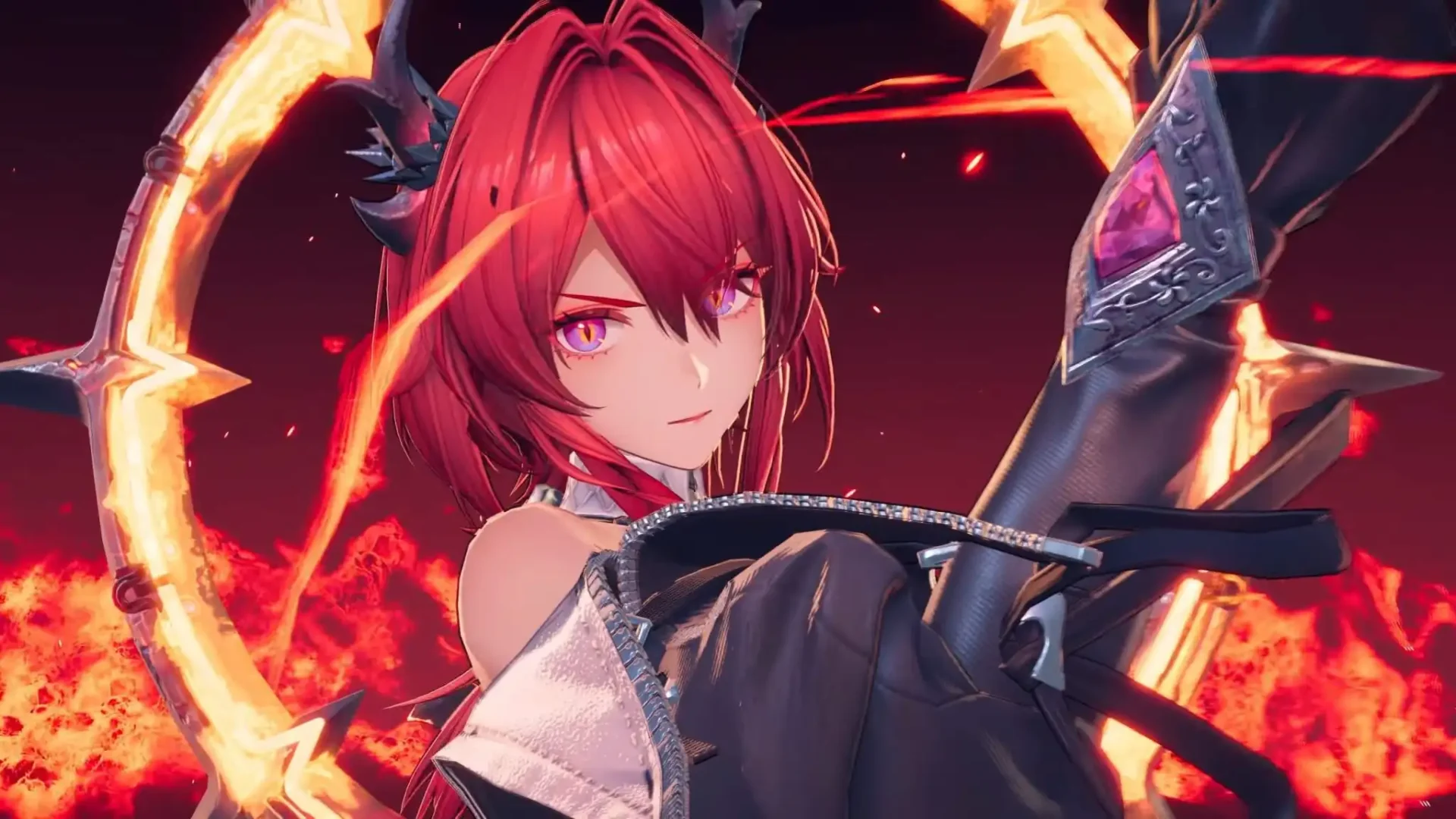
Gear in Endfield is more forgiving than most gacha games. There’s no RNG on crafting — each piece has fixed main stats, sub-stats, and set effects. Enhancement simply increases the values, so you always know what you’re building toward.
Each operator equips four items: one Armor, one Gloves, and two Kits. To craft gear, you go through the Gear Assembly menu and supply the required materials — most of which come from your AIC factory over time.
What Stats to Prioritize
Each operator has four base stats: STRENGTH (Max HP), AGILITY (Physical Resistance), INTELLECT (Arts Resistance), and WILL (Treatment/Healing Bonus). Operators have a Main Attribute that gives a larger attack bonus and a Secondary Attribute that gives a smaller one. Match your gear’s main stat to whatever your operator scales with.
In practical terms: main stats are worth approximately five sub-stats in value. Getting the right main stat first is more important than obsessing over sub-stats. Once you have the correct main stat, look for percentage bonuses that match how your character deals damage — something like “Battle Skill DMG Bonus” for carry operators.
Don’t worry about gear set bonuses early. They only kick in at Level 70 gear and are endgame optimization territory.
Weapons
There are five weapon types: Swords, Greatswords, Polearms, Handcannons, and Arts Units. Weapons are obtained through the Arsenal Exchange system using Arsenal Tickets — a separate currency earned by pulling on character banners. You also get a free 6-star weapon selector upon completing the New Horizons Beginner Banner.
Arknights: Endfield Gacha System Explained – Banners, Pity, and Where to Spend
The gacha system in Endfield has some key differences from other games in the genre. Understanding it before you spend a single pull is essential.
Pull Currencies
- Oroberyl — main pull currency for character banners (500 per single pull, 5,000 per 10-pull)
- Arsenal Tickets — weapon banner currency, earned automatically from character pulls
- Origeometry — premium currency; each piece converts into 75 Oroberyl
The Three Character Banners
Critical rule: the 120-pull guarantee does not carry over between banners. If you spend 110 pulls on a banner and it ends, you lose that progress entirely. Only commit to a limited banner if you have enough Oroberyl to hit 120 (60,000 Oroberyl) in case you need it.
Weapon Banner Rules
The Arsenal Exchange (weapon banner) uses Arsenal Tickets, not Oroberyl. You only do 10-pulls here at 1,980 tickets each. A 6-star weapon is guaranteed every 40 pulls (4 issues), and the featured weapon is guaranteed at 80 pulls (8 issues). Like the character banner, weapon pity does not carry over between banners. Only pull on a weapon banner if you have enough tickets to reach at least 40 pulls on that specific banner.
The good news: weapon pulls are essentially automatic. Every character pull earns you Arsenal Tickets based on the rarity you got. Around 120 character pulls generates enough tickets for a full weapon pity cycle without spending a single extra Oroberyl.
F2P Advice in One Paragraph
Save Oroberyl exclusively for the limited banner. Have 60,000 (120 pulls) before committing. Never spend Origeometry by converting it directly to Oroberyl — use it to upgrade the Protocol Pass instead, which gives better overall value. Don’t pull on the standard banner with saved Oroberyl; you’ll naturally pick up standard characters through lost 50/50s over time.
Arknights: Endfield AIC Factory Guide – How to Build Your First Base
The AIC (Automated Industry Complex) is what separates Endfield from every other action RPG in the market. It’s a fully functional factory system that mines raw resources, refines them, and crafts gear and consumables automatically — including when you’re offline.
If you neglect it, progression eventually grinds to a halt. Gear upgrade requirements scale sharply in later zones. But you don’t need to optimize it from day one. A basic setup handles early needs perfectly.
The Fundamentals
At the center of every AIC is the PAC (Protocol Automation-Core). Every power grid in the region links back to the PAC, and all facilities need electricity to function. Power travels from the PAC outward through Relay Towers (which extend power up to 80 meters each) and then to machines via Electric Pylons.
The workflow is straightforward once you understand it: place Mining Rigs on ore deposits, power them with Pylons, connect their output to processing machines via conveyor belts, and those machines output refined materials that feed the next stage of production. The deeper the chain, the more complex the output — but also the more valuable.
How to Get Started
- Open the Basic AIC Plan from the top-right of the screen
- Research new facilities by selecting them in the plan — research completes instantly, no wait time
- To unlock more nodes, find Protocol Dataloggers scattered across the map — they grant AIC Index needed for progression
- Switch to AIC Mode when near your PAC (this happens automatically in the Core AIC area)
- Start with the Blueprint the game gives you — it places a working foundation without any manual layout decisions
One important warning: don’t place Geothermal Generators or important buildings in corrosion zones (marked areas that deal environmental damage). Facilities placed there lose durability at roughly 2% per hour. Always place generators in safe zones and run power lines into hazardous areas.
Early AIC Priorities
- Set up production lines for Buck Capsules, Industrial Explosives, and Batteries first — these unlock outpost development and world exploration tools
- Unlock Planting on the tech tree early — it lets you grow plants inside the factory, removing the need to manually gather them in the field
- Use community blueprints if the layout feels overwhelming — the game’s Blueprint system lets you copy other players’ factory designs exactly
- The AIC also builds exploration tools like Ziplines, which create shortcuts across the open world. These feel like optional extras but save real time as the map opens up
Sanity and Daily Routine – The Habits That Actually Move the Needle
Sanity is Endfield’s stamina system. It regenerates passively and caps out — any excess regeneration past the cap is wasted. Spending it daily is the single highest-value habit you can build.
Daily commissions take around 10-15 minutes and provide consistent Authority Level EXP, premium currency, and crafting materials. Even short sessions that knock out commissions and spend Sanity keep your account moving faster than most players who only play on weekends.
A few other habits that compound over time:
- Wait until the highest available dungeon tier unlocks before spending Sanity on EXP and material stages — lower tiers give worse returns per Sanity spent
- Collect Waypoints and solve SOS puzzles during exploration — both reward EXP and sometimes premium currency for minimal time investment
- Visit friends through the Teleport Platform to exchange production boosts, which speeds up your AIC output
- Check operator affinity through the Operator Contact Terminal — some Talents are locked behind affinity thresholds and won’t unlock until you’ve built up enough relationship with an operator
Buy services for
Arknights: Endfield!
Get help with the parts of the game that take the most time. Browse available services or place a custom order.
Order
5 Mistakes New Players Make in Arknights: Endfield
- Spreading resources across too many operators. You need one solid team, not six half-built ones. Every promotion material, gear piece, and upgrade stone you split across multiple carries delays all of them. Pick your team, invest in it, and only branch out once your first squad is at a competitive level.
- Pulling on the weapon banner without enough tickets. Weapon pity resets every banner. Spending 30 pulls’ worth of tickets and then having the banner end means starting from zero next time. Only pull if you can reach at least 40 pulls (one hard pity cycle) on that specific banner.
- Ignoring the AIC in the early game. It’s tempting to skip factory setup when combat and exploration feel more immediate. But the AIC’s production compounds — the later you start it, the further behind your gear and materials fall. Even a basic setup from Day 1 puts you in a meaningfully better position by Week 2.
- Building a mixed Physical/Arts team without understanding reactions. These teams aren’t inherently bad, but without knowing how elemental reactions sequence and which status effects enable which combos, they consistently deal less damage than a focused single-type team. Learn one damage type first, then experiment.
- Spending Originium outside of character banners. Whether it’s stamina refreshes, weapon banners, or buying resources from the shop — spending Originium on anything except character banner pulls is almost always a bad trade for F2P and light spenders. Every Originium spent elsewhere is a pull you won’t have when the character you want appears.
How to Think About Your First Week
Endfield is a game that rewards consistency more than intensity. One solid team, daily commissions, and a functional AIC setup will put you well ahead of players who binge for two days and then hit a wall because their factory is empty and their team is under-built.
The right order of priorities: push the story to Chapter 3, get your AIC running, build one focused team, and save your Oroberyl with intention. Everything else follows naturally from there.
The game is genuinely F2P-friendly if you’re smart about it. The free 6-star operators alone are competitive through most of the content. Start with what you have, understand the systems, and let compounding progression do the rest.
The practical advice: pick one damage type when building your first team and stick to it. A mixed team without understanding how reactions chain together will consistently underperform a focused one.
