











Season 10 “Meltdown” brought a new Engineer to Delta Force, and he changed how players think about holding ground. Liquid Nitrogen, real name Gabriel Mercier, codename N-Two, builds his entire kit around cold. He freezes doorways, slows squads mid-fight, and turns vehicles into sitting ducks in Warfare. If you played against him once, you already know how fast a fight can turn when his freeze stacks hit max.
This guide breaks down everything you need to know about Gabriel in Season 10: what each ability actually does, how his kit works in practice, the loadouts that get the most out of him, and the tactics that beat him when you’re on the other side.
We’ll also look at where he fits best on the map and which modes reward his playstyle the most, since Gabriel isn’t an operator you can run the same way in every match.
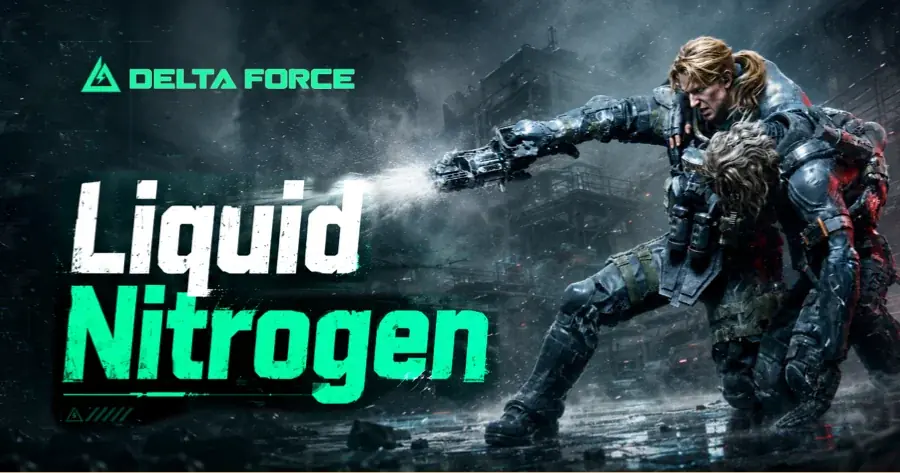
Who Is Liquid Nitrogen (Gabriel) in Delta Force Season 10
Gabriel Mercier is the new Engineer added in Season 10, codename N-Two. His backstory ties him to a power plant, which lines up with the season’s Nuclear Power Plant AZ3 map and its radiation theme. That map enters Operations as a brand-new location this season, built around an industrial layout with a central reactor core, dense machine rooms, and tight corridors. It’s the kind of environment where Gabriel’s freezing tech feels almost designed to thrive.
Unlike other Engineers who focus on building or destroying cover, Gabriel’s job is locking down territory. His abilities slow, freeze, and disable, which makes him a strong pick for squads that want to control choke points instead of just holding them with raw firepower. He’s also not a one-and-done utility operator. His passive keeps building pressure as long as he keeps landing hits, so a fight against him rarely stays static for long once the freeze stacks start climbing.
He works best as a frontline anchor. You’re not flanking with Gabriel, you’re planting yourself at a doorway, a stairwell, or an objective room and making the enemy pay for pushing through it. That positioning matters because his kit needs a contained space to be effective. Open ground lets enemies walk around a Cryo-Flask zone or scatter before stacks build up, so picking the right angle before the fight starts is part of playing him well.
Buy services for
Delta Force!
Get help with the parts of the game that take the most time. Browse available services or place a custom order.
Order
Liquid Nitrogen Abilities Explained
Gabriel’s kit has three active tools plus a passive that ties everything together. Every ability adds to the same cold effect, so using them in the right order matters more than spamming them one at a time. None of his tools deal massive burst damage on their own. Instead, they’re built to wear a target down and box them in, which means the value of his kit shows up over the course of an engagement, not in a single shot.
| Ability | Type | Effect |
|---|---|---|
| Frost Launcher | Active, primary | Fires up to six impact grenades that deal damage and apply freeze stacks on hit |
| Cryo-Flask | Active, utility | Throws a flask that creates a freezing gas zone; can also seal and freeze shut doors |
| Homing Stun Grenade | Active, utility | Auto-tracks a target and stuns on impact |
| Frostbite / Permafrost | Passive | Frostbite lowers fracture resistance in Operations; Permafrost cuts vehicle handling in Warfare |
Best Loadouts for Liquid Nitrogen
Gabriel’s playstyle is about holding a spot and forcing engagements at close to mid range, so your loadout should support that instead of fighting his strengths. Season 10 also brought two new weapons, the SVTH marksman rifle and the RM277 assault rifle, but neither is built for the kind of fighting Gabriel does best. The SVTH is a long-range tool, and most of Gabriel’s engagements happen well inside that range, so building around close-quarters control still makes more sense for him specifically.
- Primary weapon: Pick something accurate at close-to-mid range with fast handling. You’ll often be peeking the same angle repeatedly, so a weapon you can control on quick taps works better than something built for long sightlines. Consistency matters more than raw damage, since you’ll be trading shots from the same spot multiple times in a row.
- Secondary: A reliable sidearm for when you’re caught reloading mid-freeze setup. Speed matters more than raw stopping power here, since the sidearm is mainly there to cover the gap while your primary cycles or your abilities are on cooldown.
- Attachments: Prioritize recoil control and ADS speed over range-focused parts. Most of Gabriel’s fights happen inside the radius of his own abilities, so attachments that help long-range accuracy add little value compared to ones that help you react faster at close range.
- Gear: Extra grenade pouches or utility slots if your loadout allows them, since his whole kit revolves around throwables. Anything that lets you carry more utility back to position is worth the trade, even if it means giving up some armor or carrying capacity elsewhere.
The goal is simple: survive long enough at your chosen chokepoint for your freeze stacks to do the real work. A loadout that helps you hold one spot consistently will outperform one built for mobility or long engagements when you’re playing this operator.
How to Use Liquid Nitrogen Effectively
Gabriel rewards sequencing over button mashing. None of his tools are meant to be used in isolation, and a player who fires off abilities randomly will get far less value than one who plans the order ahead of time. A strong opening looks like this:
- Seal or slow an entry point with Cryo-Flask before the enemy commits to a push. Doing this early, before contact, denies the option instead of just reacting to it once enemies are already in the room.
- Cover the same area with Frost Launcher to start stacking freeze on anyone caught inside. Since you have up to six shots, you can afford to commit several to the same chokepoint without running dry.
- Track down anyone who breaks away with the Homing Stun Grenade before they recover. This step matters most against squads that try to split up the moment they realize they’re walking into a freeze zone.
Once a target hits max freeze stacks, they’re frozen in place, which is the moment your team should already be moving in to finish the fight. Calling out frozen targets fast makes a bigger difference than landing one more ability yourself, since a frozen enemy is a guaranteed kill for whoever reacts first. Communication is really the difference between a Gabriel who racks up freezes that go to waste and one who turns every freeze into a kill for the squad.
Best Maps and Modes for Liquid Nitrogen
Gabriel performs best wherever players are funneled into tight spaces. Stairwells, narrow interiors, and single-entry objective rooms all let his Cryo-Flask and Frost Launcher cover the whole area at once, instead of leaving gaps that enemies can slip through unaffected.
The AZ3 Nuclear Power Plant map suits him particularly well. Its industrial layout is full of corridors and enclosed machine rooms where freeze effects linger and enemies can’t easily spread out to avoid them. The map also adds its own radiation mechanic, with radiation levels building up the longer players stay in certain zones, which already pushes squads toward specific safe paths and rooms. Gabriel’s kit punishes exactly the kind of bottlenecked movement that map design encourages, so the two work together more than most operator and map pairings in the game.
In Warfare, his value shifts toward vehicles. Permafrost stacks cut into handling and turret rotation, so Gabriel becomes a strong pick for squads trying to slow down an armored push or hold a capture point against repeated vehicle pressure. Large-scale Warfare maps with open lanes for vehicles give him fewer chances to use Cryo-Flask effectively against infantry, but they make his passive against armor far more valuable, since vehicles can’t dodge the same way infantry can once they’re caught in a freeze stack buildup.
How to Counter Liquid Nitrogen (Gabriel)
Beating a good Gabriel comes down to denying him the setup time his kit needs. He has no instant burst damage that can wipe a squad in a single moment, so every counter listed here is about disrupting his rhythm before the freeze stacks pile up.
Liquid Nitrogen vs Other Engineers: Is He Worth Picking in Season 10
Most Engineers in Delta Force lean toward building cover or breaking through enemy defenses. Gabriel fills a different role entirely. He’s about locking down space and disabling enemies and vehicles rather than reinforcing or demolishing structures, which means he doesn’t compete directly with most other Engineers for a squad slot. He covers ground they simply don’t.
That makes him less flexible in open engagements, where his short-range tools have fewer chances to land, but extremely strong on objective-heavy maps and in Warfare matches where vehicle control decides the round. If your squad already has an Engineer for building or breaching, Gabriel slots in well as a second pick focused purely on crowd control, and the two playstyles complement each other instead of overlapping. For Season 10 specifically, his strength on the new AZ3 map and his usefulness against vehicles in Warfare make him a solid pick worth learning early, rather than a niche operator you only bring out for specific matchups.
Buy services for
Delta Force!
Get help with the parts of the game that take the most time. Browse available services or place a custom order.
Order
