












Bungie’s new extraction shooter is finally here — and it doesn’t hold your hand. Before you drop into Tau Ceti IV for the first time, this guide covers everything you need to understand: the game’s core rules, Runner shells, factions, maps, and the mindset that separates players who extract from players who lose everything.
Marathon launches March 5, 2026 on PC, PlayStation 5, and Xbox Series X|S for $40. No pay-to-win, no subscription — just a steep learning curve and a world that will punish hesitation. This guide will make sure your first run isn’t your worst one.
Whether you’ve never touched an extraction shooter before or you’re coming from Destiny 2 and expect things to feel familiar — they won’t, not entirely. Marathon is its own thing. Read this first.
What Is Marathon? PvPvE Extraction Shooter Basics for Beginners
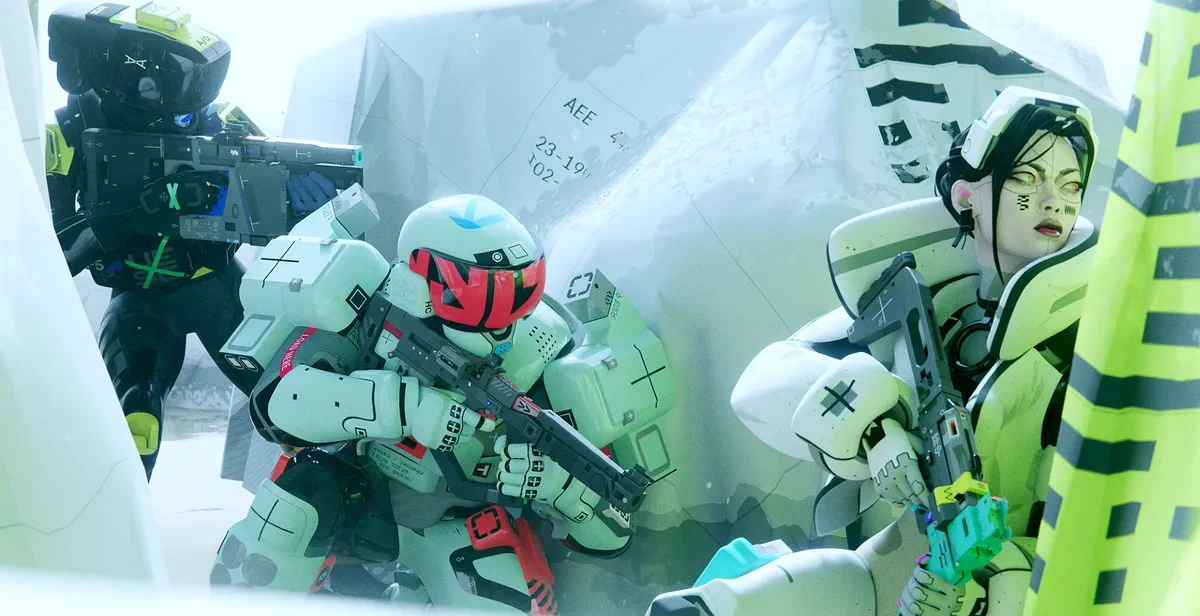
Marathon is a first-person PvPvE extraction shooter set on the abandoned colony world of Tau Ceti IV in the year 2893. You play as a Runner — a human who gave up their biological body in exchange for a specialized cybernetic shell. Competing factions have hired you to infiltrate the colony, scavenge whatever you can find, and get out alive.
The catch? Other Runners are doing the exact same thing in the same lobby.
That means you’re dealing with both AI enemies — UESC security robots that patrol the environment — and human players who will happily take everything you’ve collected the moment you let your guard down. This is the core tension of every single run.
Unlike a battle royale, you’re not trying to be the last one standing. You’re trying to extract with your loot intact. You can win a run without firing a single shot at another player. You can also spend 30 minutes looting a zone, get killed 15 seconds from extraction, and walk away with nothing. Both of those outcomes are part of the game.
Marathon supports solo play, two-person crews, and squads of three. Full cross-play and cross-save are available at launch across all platforms.
Make a breakthrough
in Marathon!
Boost your progress in Marathon with services built to save time and unlock what matters most. Get started.
View services
Marathon Gameplay Loop Explained: Loadouts, Looting, Contracts, PvP, and Extraction
Understanding this loop is more important than knowing any specific ability or weapon stat. Everything else builds on it.
- Choose your Runner shell and loadout — what you bring in is what you risk losing
- Drop into a zone on Tau Ceti IV — you share the map with other crews
- Scavenge for loot — containers, enemies, puzzles, and faction contracts
- Complete faction contracts — these give you progression regardless of whether you extract
- Deal with AI security and rival players — fight, avoid, or negotiate
- Find an extraction point and get out — only extracted loot is kept permanently
The golden rule of Marathon: anything you don’t extract is lost. Your backpack, your weapons, your gear — if you die without reaching the exit, it’s gone. Faction XP carries over, loot does not.
This creates a constant internal debate every run: do I push deeper for better loot, or do I take what I have and leave? Learning when to stay and when to go is the real skill that separates beginners from experienced Runners.
Best Runner Shell for Beginners: Full Class Breakdown + First Pick Recommendation
Marathon launches with six Runner shells plus one special frame called Rook. Each shell has a Prime ability (think ultimate), a Tactical ability, and two Traits. You pick your shell before each run, and you can change it freely between runs.
Here’s a quick breakdown of all seven:
| Shell | Archetype | Key Abilities | Best For |
|---|---|---|---|
| Destroyer | Combat specialist, frontline brawler | Homing missiles (Search & Destroy), energy barricade (Riot Barricade), aerial dash, tactical sprint | Beginners — straightforward, durable |
| Assassin | Stealth infiltrator | Smoke screen, Active Camo (invisibility), smoke dive | Sneaky solo play, avoiding fights |
| Recon | Intel and tracking | Echo Pulse (sonar reveal), Tracker Drone, awareness ping | Support roles, locating threats |
| Vandal | Aggressive mobility | Amplify (movement boost), Disruptor arm cannon, double jump, power slide | High-skill PvP and chaos |
| Thief | Loot acquisition | Pickpocket Drone, Grapple hook, X-Ray Visor (see loot through walls) | Looting-focused runs |
| Triage | Field medic | Buddy drones that heal allies, electric gauntlets for instant revives, battery overcharge | Team support |
| Rook | Scavenger frame (solo only) | Blends in with UESC AI forces, joins in-progress matches with no starting gear | Low-risk rebuilding after losses |
Destroyer is the best starting shell for new players. Its kit is the most readable — you have a shield to block damage, homing missiles for offense, and a thruster for repositioning. You don’t need to think about timing invisibility windows or coordinating drone abilities. Point, shoot, survive.
Rook is worth understanding early even if you don’t play it right away. It’s a fundamentally different way to enter a match — you drop into a lobby that’s already in progress with nothing in your loadout. High risk of encountering geared Runners, but you lose nothing if you die. Good for rebuilding your vault after a string of bad runs.
Cores & Implants Guide: How Builds, Heat, and Ability Mods Work in Marathon
Each shell is a foundation, not a ceiling. Two players running the same Destroyer shell can play very differently based on how they’ve customized it.
Cores are shell-specific modifiers that change how your abilities behave. For example, the Destroyer’s Riot Barricade can be tuned to return incoming damage as shield energy, or to fire a retaliatory missile every time it takes a hit. You pick Cores before each run.
Implants are universal stat upgrades — things like movement speed, jump height, heat capacity — that any shell can use. Heat is Marathon’s stamina-equivalent: movement abilities, dashes, and certain actions generate heat, and if you generate too much you slow down.
Together, Cores and Implants let you build toward a specific role within your archetype. Don’t stress this too much at first. Play the default kit, learn how your shell feels, then start adjusting.
Beginner Weapons & Gear Tips: What to Bring (and Not Risk) on Early Runs
Marathon launches with a wide arsenal of moddable weapons: assault rifles, LMGs, pistols, sniper rifles, and more. Weapons are either scavenged in-raid or unlocked through faction progression. You can attach mods to change fire behavior, recoil, range, and other stats.
The most important thing to know as a beginner isn’t which gun is best — it’s don’t bring your best gear into early runs.
Everything you equip is at risk. If you die, whoever kills you gets to loot your backpack. The correct approach when you’re learning the game is to run mid-tier loadouts until you understand the maps, the extraction routes, and where other players tend to push. Once you know what you’re doing, you can start taking bigger risks for bigger rewards.
Also worth noting: weapons have finite ammo per run, so burning through your magazine in a firefight with AI enemies before encountering a player squad is a real problem. Pick your fights carefully.
All Factions Explained: Fastest Progression, Contracts, and Best Beginner Priority
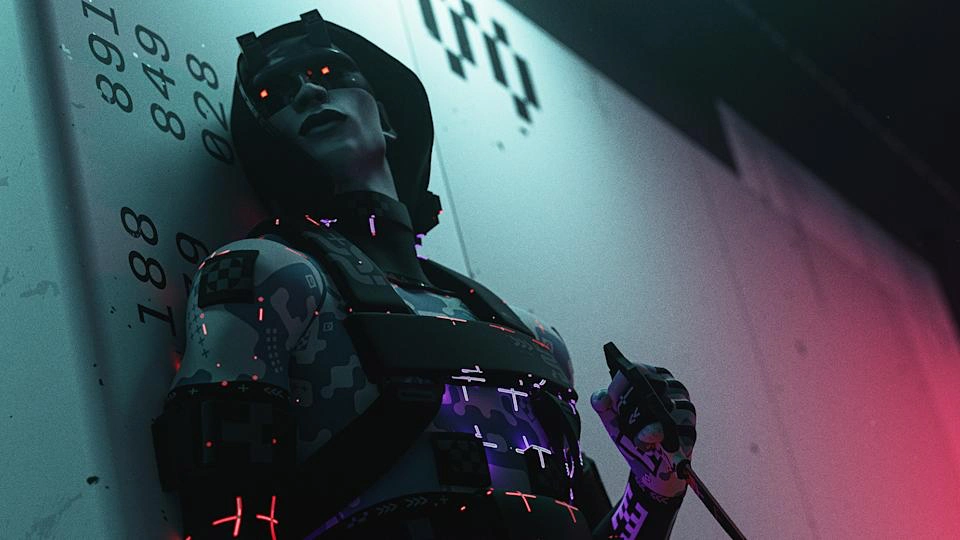
Six factions operate on Tau Ceti IV, and all of them want to use you to further their goals. You work for all six simultaneously — there’s no exclusive allegiance. Each faction gives you contracts to complete during your runs, and completing them earns faction XP that unlocks upgrades on their skill tree.
| Faction | Focus |
|---|---|
| CyberAcme | Cooldowns, inventory efficiency, general utility |
| NuCaloric | Exploration, resource gathering |
| Traxus | High-value loot extraction |
| MIDA | Sabotage, explosives, disruption |
| Arachne | PvP combat and Runner kills |
| Sekiguchi Genetics | Resilience and survivability |
Faction upgrades include things like expanded vault space, stronger starting loadouts, and Runner shell upgrades. These are season-long unlocks — they persist through the season even if you die on every run. Seasons last approximately 90 days, after which gear resets but cosmetics carry over.
For beginners, the recommended starting priority is CyberAcme. Its upgrade tree focuses on utility and efficiency, making runs more forgiving while you’re still learning. You can push other factions simultaneously — just make CyberAcme your primary focus early.
One important mechanic: when a run gives you a choice between faction allegiances, you’ll earn the most XP from whichever faction you align with in that moment. You can still progress others passively, but being intentional about which faction you prioritize each run speeds things up considerably.
All Maps & Zones Overview: Best Starter Areas + Tau Ceti IV Difficulty Curve
Marathon launches with four maps: three ground zones on Tau Ceti IV and one endgame zone aboard the UESC Marathon ship itself, called Cryo Archive.
The three ground zones range in size from the tighter, indoor-heavy Outpost to more open wilderness areas. Each has its own patrol patterns for UESC security robots, loot distribution, and extraction point placement. As you go deeper into the colony, difficulty escalates. You’re meant to learn on the ground zones before attempting the ship.
Cryo Archive is endgame content. Once the way into orbit unlocks, you bring your best gear to the ship, solve raid-like vault puzzles to unseal frozen rooms, fight fully-geared enemy crews, and go up against some of the hardest enemies in the game. The rewards match the difficulty. Don’t go up there before you’re ready.
Each zone changes somewhat with each run — events shift, enemy positions vary, and environmental hazards keep things unpredictable. Learning general map knowledge is more useful than memorizing exact spawn locations.
PvP Survival Guide: When to Fight, When to Disengage, and How to Avoid Bad Fights
This is the decision that defines almost every run, and it’s where beginners tend to make their biggest mistakes.
Up to six crews of three share a lobby. Every other Runner you encounter is a direct threat to your loot. But combat is loud — gunfire draws attention from other crews — and even a won fight leaves you exposed, low on ammo, and in a known location.
A few principles to use as a starting point:
- If you’re carrying a full backpack and you’re close to extraction, don’t fight. The math doesn’t favor it.
- If you have a position and information advantage, the engagement becomes more viable. Ambushing a distracted crew is different from pushing a team that’s already set up.
- If you’re outnumbered and your squad is split, retreat and regroup.
- Proximity chat is live. You can hear enemy players near you, and they can hear you. Use this. Skilled players use prox chat to misdirect, negotiate temporary truces, or identify how many enemies are around them before committing to a fight.
Marathon supports a lone survivor mechanic — if your crewmates are down, a single surviving player can reboot them. So don’t completely give up just because things go sideways.
How Extraction Works: Safe Routes, Extract Camping, and “Get Out Alive” Strategy
Extraction points are marked on your map. They’re the final step of every successful run, and they’re usually the most dangerous part. Other players know where extraction zones are too. Camping them, contesting them, and attacking crews that are about to extract is completely normal behavior. Don’t assume that reaching the extraction point means you’re safe.
A few things to keep in mind:
The mindset shift that helps most beginners: stop thinking about extraction as the end of the run. Think of it as the only goal that actually matters. Kills, loot quantity, how long you survived — none of it counts if you don’t get out.
Between-Runs Progression: Vault Storage, Seasonal Resets, and Reward Pass Explained
Between runs, extracted loot goes into your vault — your permanent storage. Vault capacity can be expanded through faction upgrades, so investing in that early gives you more room to work with over a season.
Seasons last around 90 days. At the end of each season, gear resets — everyone starts fresh on the faction upgrade trees. This is actually good news for beginners: it means there’s a natural entry point every few months where the gap between experienced and new players narrows considerably.
Cosmetics don’t reset. And Marathon’s Reward Pass doesn’t expire, so you’re not forced to grind on a deadline. Progress at your own pace.
The game also has a Codex — a lore database you build up by discovering secrets and completing objectives across runs. It’s how Marathon tells its story without a traditional campaign. You piece together what happened to the colony by playing, not by sitting through cutaways.
Make a breakthrough
in Marathon!
Boost your progress in Marathon with services built to save time and unlock what matters most. Get started.
View services
Top 10 Marathon Beginner Tips: Contracts, Map Learning, Economy, and Consistent Extracts
Is Marathon Worth It in 2026? Beginner-Friendly Features, Cost, and Learning Curve
At $40 with no subscription and no pay-to-win mechanics, Marathon’s barrier to entry is lower than most comparable games. The seasonal structure means there are natural restart points that level the playing field, and Bungie added a dedicated solo mode so you’re never forced into a squad if you’d rather learn at your own pace.
The learning curve is real. Extraction shooters punish mistakes in ways that other genres don’t — losing your loadout after a bad run stings in a way that losing a battle royale match simply doesn’t. But that same friction is what makes the wins feel meaningful.
If you’re unsure, the Server Slam — Marathon’s open preview event running February 26 through March 2 — lets you try the game before launch for free. Any rewards earned during the Slam carry over to Day 1. That’s your risk-free way to see if the loop clicks for you before committing.
The floor is low enough to get started, and the ceiling is high enough to keep you coming back. For a new runner, that’s a fair deal.
