











Runes of Aldur is the league that finally gave Expedition its own Atlas Passive Tree. Instead of sharing points with your main Atlas progression, you now farm a separate 24-node tree built entirely around Grand Expedition and the new rune mechanic tied to it. This changes how you approach Remnants, how you gear up through Runeforging, and how much currency you can pull out of a single map.
This guide breaks the whole system into pieces you can actually use. You’ll see how the Expedition Atlas Passive Tree works, how to unlock its points, which nodes matter, and how Runeforging turns Verisium into real character power through Runic Ward.
If you’ve been putting off Runes of Aldur because the patch notes looked dense, this is the shortcut. By the end, you’ll know exactly where to path first and why.
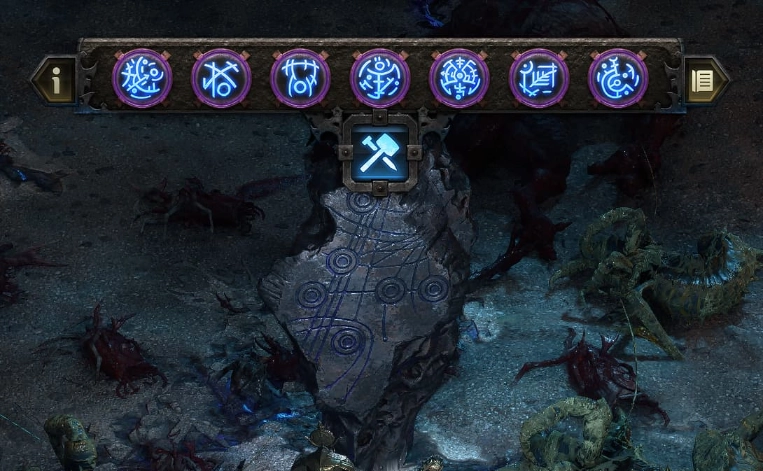
What Is the Runes of Aldur League Mechanic?
Runes of Aldur launched alongside the Return of the Ancients expansion on May 29, 2026. It’s built around Ezomyte Remnants, Expedition-style encounters that show up from Act 1 onward. Find a Remnant, pick a reward combination, and the game revives nearby monsters with extra buffs. Kill them again, and you get the reward plus a currency called Verisium.
The league mechanic itself is available to every player, no expansion purchase required. What patch 0.5.4 added on top, released June 24, 2026, is a dedicated Atlas Passive Tree just for Expedition content.
Keep these two systems mentally separate:
- Runes of Aldur is the league mechanic — Remnants, Verisium, Runeforging.
- The Expedition Atlas Passive Tree is the progression system that customizes how that mechanic behaves on your Atlas.
They work together, but one doesn’t replace the other.
Buy services for
Path of Exile 2!
Get help with the parts of the game that take the most time. Browse available services or place a custom order.
Order
The Expedition Atlas Passive Tree vs the Main Atlas Tree
A lot of players assume this new tree eats into their regular Atlas points. It doesn’t. The Expedition Atlas Passive Tree runs on its own currency, its own point pool, and its own set of 24 nodes, 12 of which are notables.
| Main Atlas Passive Tree | Expedition Atlas Passive Tree | |
|---|---|---|
| Purpose | Governs maps, Towers, Citadels, and general league mechanics | Customizes Expedition and Verisium Remnant encounters only |
| How points are earned | Standard Atlas progression | Defeating bosses in the Grand Expedition questline |
| Node count | Large, shared across all content | 24 nodes total, 12 notables |
| Affects | Your whole Atlas setup | Expedition difficulty, rewards, and Remnant behavior |
Your regular Atlas points stay untouched. This tree is a bolt-on system, which means you can build around Expedition farming without sacrificing anything on your main map strategy.
How to Unlock and Earn Expedition Atlas Points
You don’t get these points from clearing maps or completing Atlas bonus objectives. They come specifically from the Grand Expedition questline.
Here’s the process:
- Start the Grand Expedition questline once it becomes available on your Atlas
- Track down and defeat the bosses tied to that questline
- Each boss kill grants a passive point usable only in the Expedition Atlas Passive Tree
- Spend the point immediately or save it for a specific notable further down the path
Because points are tied to boss kills rather than passive farming, rushing this questline early gives you a real head start. Players who ignore Grand Expedition in the first week end up spending Remnants blind, without any tree bonuses backing them up.
Key Nodes and Notables in the Expedition Atlas Tree
Not every node pulls its weight. A few of them define how the whole tree plays.
Feeling Lucky? unlocks the ability to buy Liquid Verisium from Farrow. Spend it and you start a Remnant encounter instantly, with a random Runic Inscription instead of the one currently on offer. This is the node most Expedition farmers grab first, since it removes the guesswork from bad Remnant rolls.
Double or Nothing gives detonated Remnants a chance to add an extra runic modifier — a straightforward reward multiplier if your build can handle the extra difficulty that comes with it.
Essence nodes sit on the right side of the tree, with a third one in the middle. Together they connect through an efficient path and stack essence drop chances, which turns Expedition into one of the strongest essence farms currently available.
A quick summary of what these nodes actually change:
- Feeling Lucky? — buy Liquid Verisium, skip bad Remnant rolls
- Double or Nothing — extra runic modifier chance on detonation
- Essence nodes (x3) — stacked essence drop rates along one efficient path
The Rune Mechanic Explained: Verisium, Runeshapes and Remnant Crafting
This is where most guides get vague, so let’s be precise about what each term means.
Runeshapes are the building blocks of a Remnant encounter. Before a fight starts, Runeshapes get arranged according to whatever Runic Recipe is currently available. Each Remnant can hold between two and ten recipe slots, and the larger layouts show up less often.
Every additional Runeshape slot you add increases the number of enemy waves you’ll fight. Later waves also come with extra runic modifiers, so a ten-slot Remnant is a completely different fight than a two-slot one — more monsters, more danger, but a bigger payout at the end. The crafted reward only unlocks once you finish the encounter, so a bailed Remnant gives you nothing.
Verisium is a stackable currency dropped by the empowered monsters inside Remnant encounters. It’s not something you slot into gear directly. Instead, it pays a cost at the Verisium Anvil, which is a separate system entirely.
Rune propagation got reworked in patch 0.5.4. Remnants now randomly choose which rune slot propagates to further monsters, and the game highlights the propagating rune visually so you can track it mid-fight. This changes how you prioritize kill order inside a Remnant — the propagating rune spreads its effect to nearby enemies, so killing the right monster first matters more than it used to.
Runeforging at the Verisium Anvil — Turning Runes Into Gear Power
Verisium only becomes useful once you spend it, and that happens at the Verisium Anvil, unlocked early through Farrow’s questline in Act 1.
Armor Runeforging works differently depending on the item level of the piece you’re upgrading:
- Armor below item level 55 gains Runic Ward completely free, with no downside
- Armor at item level 55 or higher trades a portion of its base armor, evasion, or energy shield for Runic Ward instead
That threshold is the single most important number in the whole system. Runeforge freely on leveling gear. Treat endgame gear as a trade-off, not a freebie, and check the forge preview before committing Verisium to a piece you’re not ready to compromise.
Unique Runeforging unlocks later, in Act 3, once you clear the Mystic Refuge and complete Farrow’s Runeseeker questline. It targets unique weapons and armor that dropped below level 55, letting you push their base type higher. Upgraded unique weapons gain more base damage. Upgraded unique armor gains higher base defenses plus Runic Ward. This is the mechanic that drags an old, outdated unique back into endgame relevance instead of leaving it in your stash forever.
Runic Ward itself deserves its own explanation, because it does more than sit under your Life bar as extra padding. It activates the moment your Life hits zero, absorbs what would otherwise be a killing blow, and regenerates on its own at a default rate of 5% per second. On top of that, Kalguuran skills and support gems spend Runic Ward instead of mana, which means the same pool covers both your survival buffer and part of your offense. Stacking Ward and its regen rate buys you both durability and casting room at the same time.
Liquid Verisium and Farrow's Role in the Rune Economy
Farrow sits at the center of both systems covered in this guide. She runs the Verisium Anvil, and once you take Feeling Lucky? in the Expedition Atlas Passive Tree, she also sells Liquid Verisium.
Spending Liquid Verisium starts a Runic Remnant encounter immediately, with a randomized Runic Inscription instead of whatever roll happened to spawn naturally. This matters because Remnant rolls can be genuinely bad — low slot counts, weak modifier combinations, or recipes that don’t match your farming goal for that session. Liquid Verisium gives you a way to skip past that and get straight to a roll worth running.
Best Atlas Passive Tree Pathing Strategy for Rune Farming
Pathing decisions come down to what you’re optimizing for: raw currency, or safety while you level a fresh character.
Runes of Aldur Atlas Tree — Common Mistakes to Avoid
A few habits quietly waste time and currency across the whole system:
- Runeforging endgame armor (ilvl 55+) without checking the forge preview first, then losing more base defense than the Ward was worth
- Running high-slot Remnants before your build can handle the extra enemy waves
- Ignoring the Grand Expedition questline early on, which delays every Expedition Atlas point you could be earning
- Hoarding Verisium instead of spending it on low-level gear, where Runic Ward comes with zero downside
Buy services for
Path of Exile 2!
Get help with the parts of the game that take the most time. Browse available services or place a custom order.
Order
